
New Survey Shows Shifting Attitudes Toward End-of-Life Arrangements
Surprising Results from the Wake Forest Law Survey on Death Care
Winston-Salem, NC – Caring for our dead is one of the oldest practices of society, yet attitudes and trends around death care are rapidly changing—a suspicion that was confirmed by the results of the recent Wake Forest Law Survey on Consumer Preferences in Death Care. Conducted by Professor Tanya Marsh, the foremost expert in funeral and cemetery law, the survey sought to understand the attitudes of American adults toward six methods of disposition: cremation, casket burial, donation to science, green burial, human composting, and water cremation. With data from 1,510 participants, the results reveal significant shifts in disposition preferences, and a death care landscape that is far more complex and contradictory than the prevailing narrative suggests.1
Key survey findings included: 1) a growing interest in alternative methods of disposition. Over half of respondents would consider a green burial, and human composting (natural organic reduction) and water cremation (alkaline hydrolysis) are gaining traction; 2) Only about 33% of participants rank cremation as their first choice for disposition, yet the actual national cremation rate stands at 62%, suggesting a variety of external factors may be driving consumers toward cremation more frequently; 3) A surprising resurgence in interest in “traditional” casket burial among Gen Z, suggesting a potential shift away from the decades-long trajectory toward cremation; and 4) Embalming, the cornerstone of the regulation of the funeral industry, is of interest to only a minority of Americans.
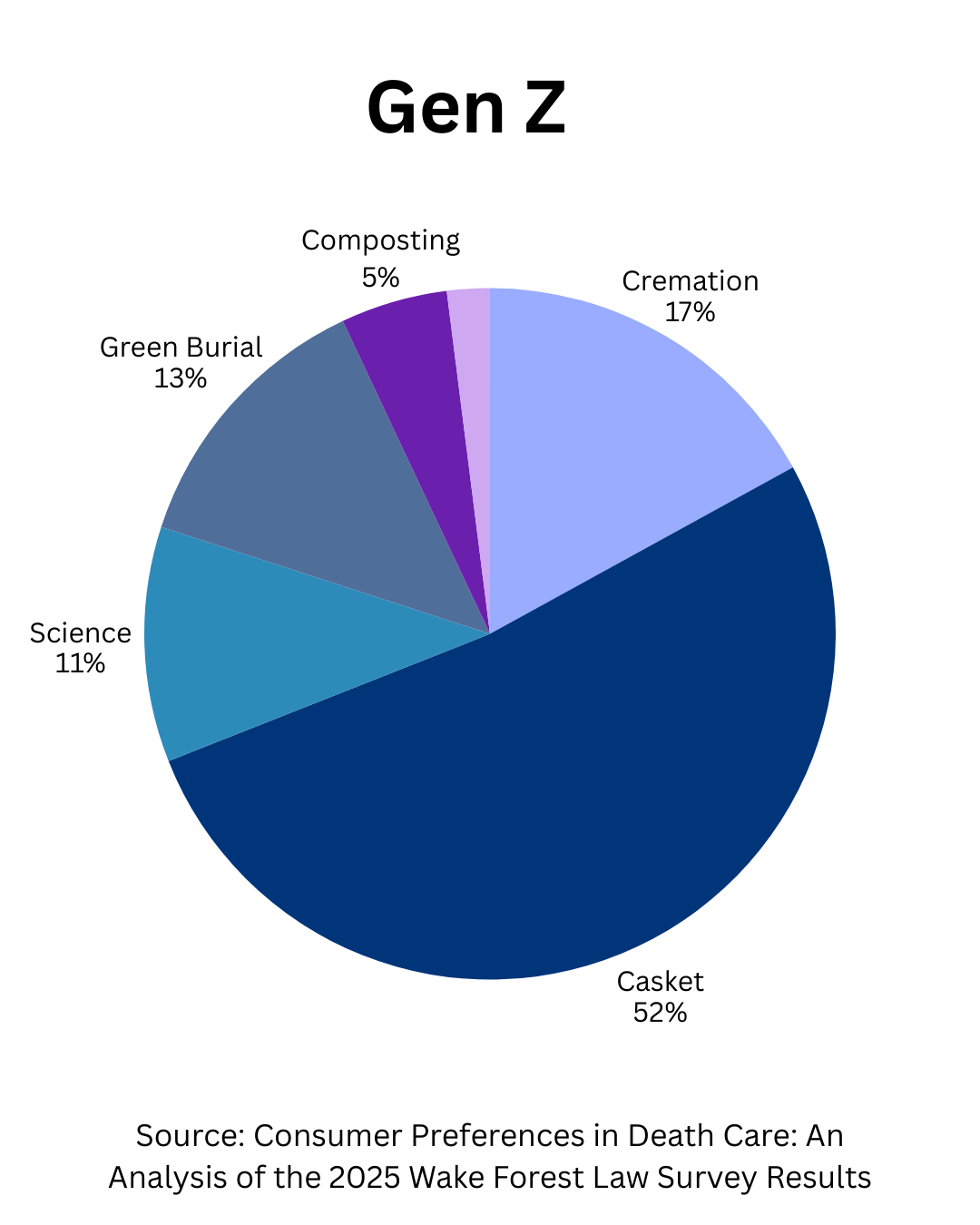
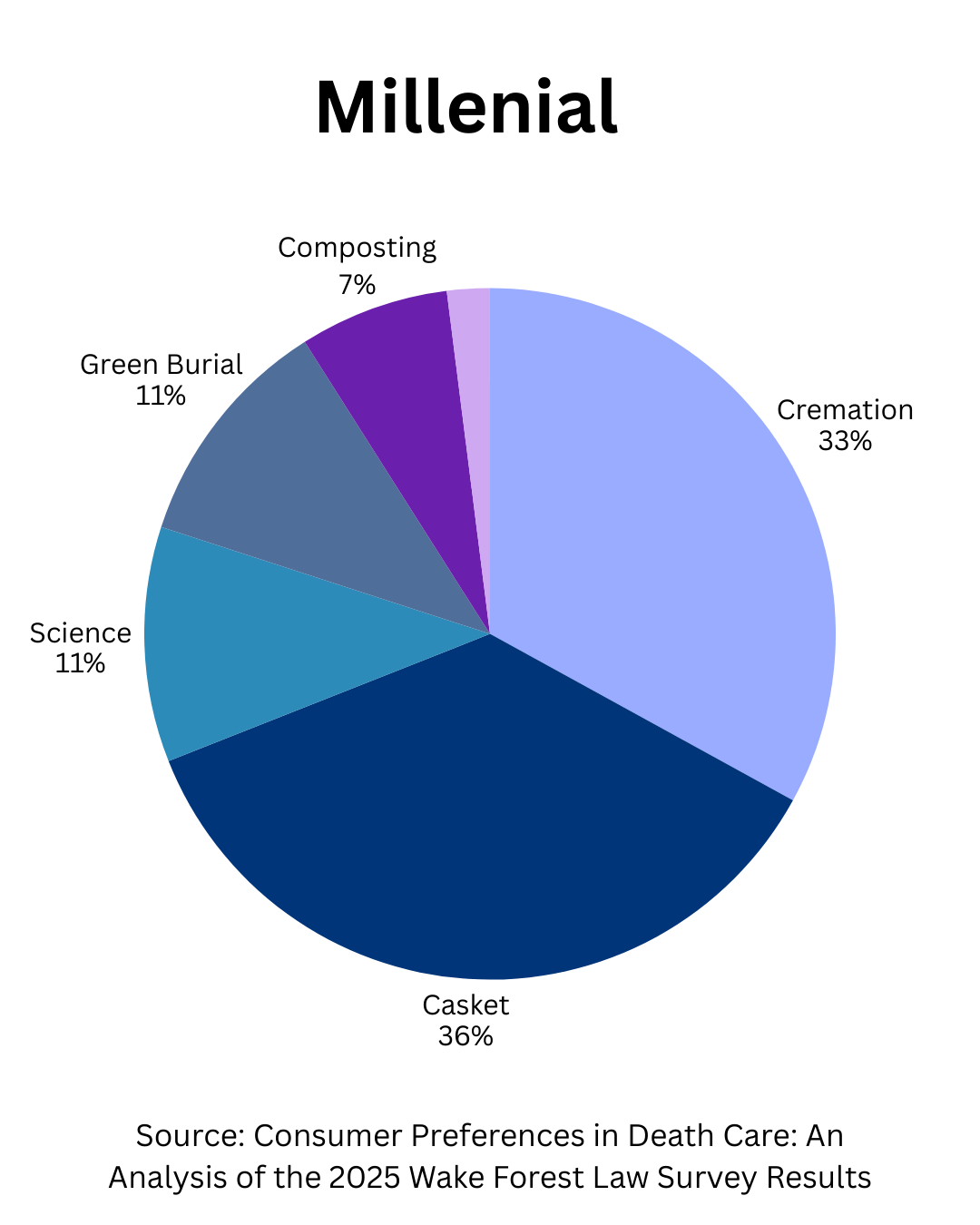
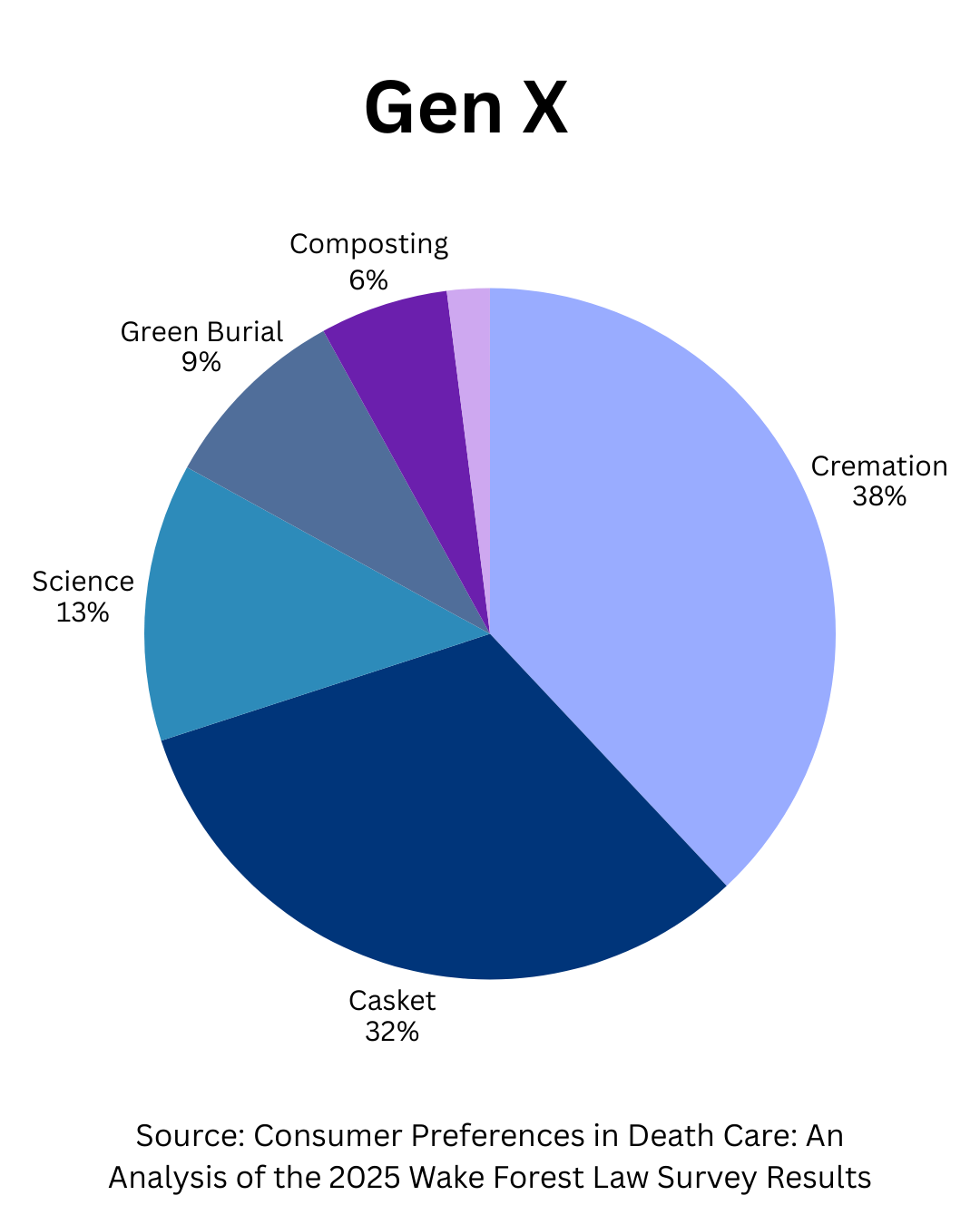
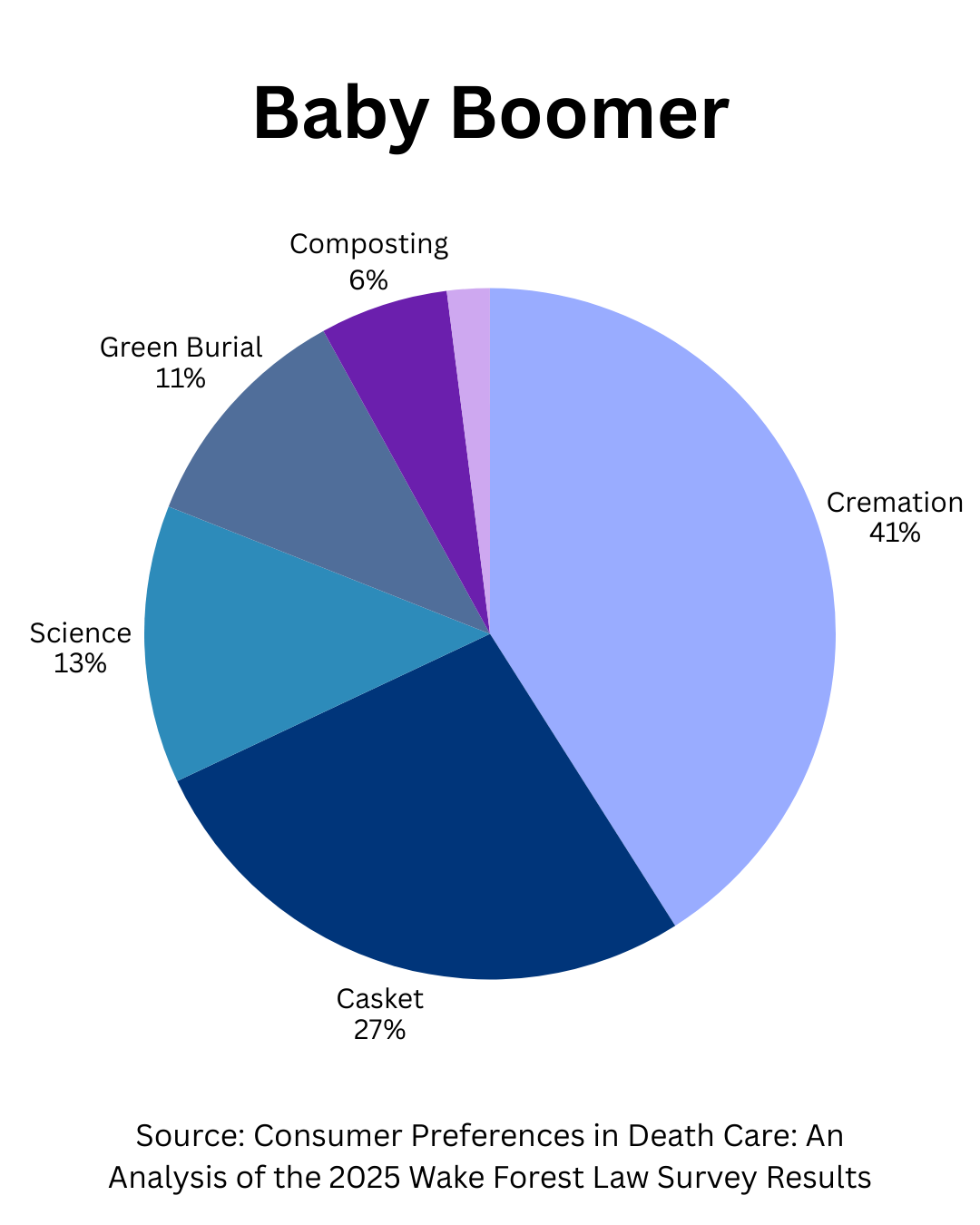
Geographic location, race, religious affiliation, and political orientation were also important factors. Cremation was more popular than casket burial in the West, Northeast, and Midwest than in the South. Respondents who identified as Black preferred casket burial more than those who identified as White. Interest in green burial and human composting was fairly even across racial groups. Those who identified as Roman Catholic, Protestant, or Jewish preferred casket burial; those who identified as Atheist, Agnostic, or Nothing in Particular preferred cremation. Respondents who identified as conservative preferred casket burial over cremation, while the inverse was true for liberals. Interest in green burial and human composting was much stronger in liberals and moderates than conservatives.
These volatile findings and insights not only underscore the urgent need for annual surveys to track shifting currents, but also serve as a call to action to all those involved in the death care field.
“The Wake Forest Law national survey supports what funeral reform advocates have been arguing for years. The broader public wants to pursue green death options but the current regulations and laws in the funeral industry do not support the will of the people,” says Caitlin Doughty, founder of the Order of the Good Death and funeral reform advocate.
These volatile findings and insights not only underscore the urgent need for annual surveys to track shifting currents, but also serve as a call to action to all those involved in the death care field. Policymakers can use the insights to ensure that the laws keep pace with the growing consumer demand for sustainable alternatives like natural organic reduction. Simultaneously, industry stakeholders can leverage the data to better understand what the American public truly wants, and to provide a market that meets that demand.
To learn more, read the “Consumer Preferences in Death Care: An Analysis of the 2025 Wake Forest Law Survey Results” whitepaper.
Contact: Tara Ebrahimi, Wake Forest University School of Law,
- Although funding support was provided by the Cremation Association of North America (CANA), this was a completely independent academic study. CANA played no role in developing the questions, the administration of the survey, or the analysis of the data. ↩︎
Categories: Our Research