Energy for Change
Energy for Change
How Emile Thompson (JD ’10) Blends the Law and Science to Bring Clean Energy to Washington, DC
“Two roads diverged in a wood, and I—I took the one less traveled by, And that has made all the difference.”
Robert Frost
For Emile Thompson (JD ’10), two roads diverged after he earned his undergraduate degree, and one took him not to a “yellow wood,” but rather, to a green Forest. “My family is heavily science-oriented,” says Thompson. “My grandfather was a surgeon, my mother has a PhD in microbiology, my brother is a surgeon. So I always figured I’d go into the sciences as well.” But after receiving a bachelor’s of science in computer science, with minors in math and biology, and enrolling in a PhD program for bioinformatics, he quickly realized that wasn’t the path for him. “It was isolating, and I’m much more of a people-person,” he says. So after a year, he left the PhD program, took the LSAT, and arrived at Wake Forest Law.
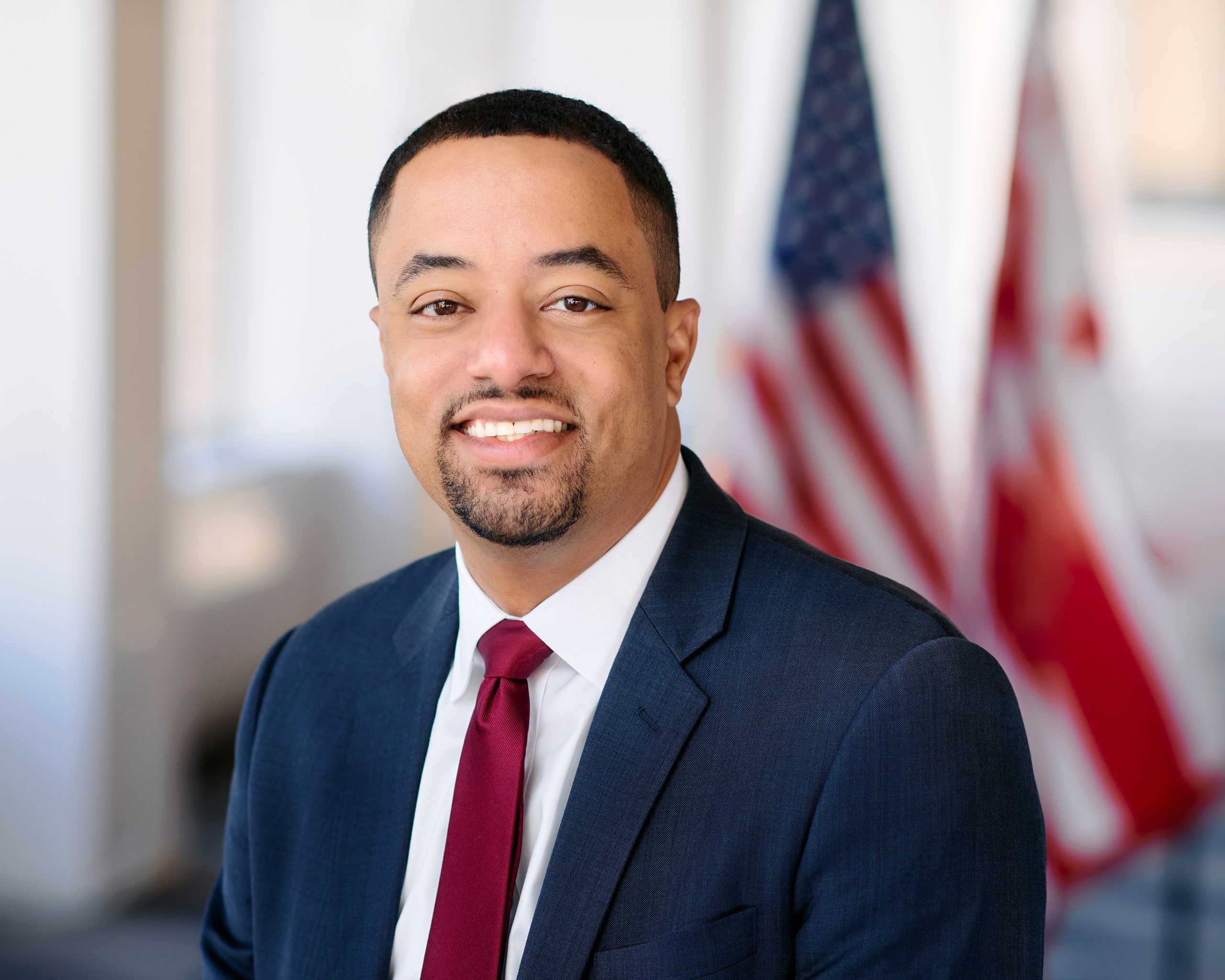
Yet as the chair of the Public Service Commission of the District of Columbia (DCPSC), Thompson has been able to seamlessly blend two of his passions together: science and the law. In this role, his mission is to ensure that utilities companies provide safe, affordable, and reliable services to DC residents, while also taking into account the District’s climate commitments.
Through programs like Power Path DC, which Thompson helped launch in 2020, the DCPSC aims to modernize the city’s energy grid and achieve the District’s ambitious clean energy and climate goals. “Our planet is getting warmer,” says Thompson. “And one of the biggest reasons for that is our energy infrastructure. Transitioning to clean, carbon-free energy sources and distribution systems is very important for our sustainability—for our resiliency.”
Power Path DC consists of four pilot projects, including a geothermal community heat pump project to replace fossil fuel-based space conditioning systems, a solar aggregation and advanced inverter project, a virtual power plant project, and a transactive neighborhood renewable microgrid to show how community-based renewable energy systems can provide essential grid services. All of the projects are highly innovative and collaborative, and will benefit distressed neighborhoods in DC.
While environmental justice and sustainability—and the drive to diversify energy sources so that there’s less reliance on natural gas—are very much at the forefront of the DCPSC’s work, Thompson acknowledges that it has been a challenge to get DC residents to buy in. “Given that some of the incentives set forth by the federal government are being taken away, there will be a direct impact on folks’ energy bills,” says Thompson. “People will have tough decisions to make about how committed we are as a society to this energy transition. But I think we’re at an inflection point. I strongly believe that once we get to a certain adoption level, it will ultimately lead to greater affordability.”
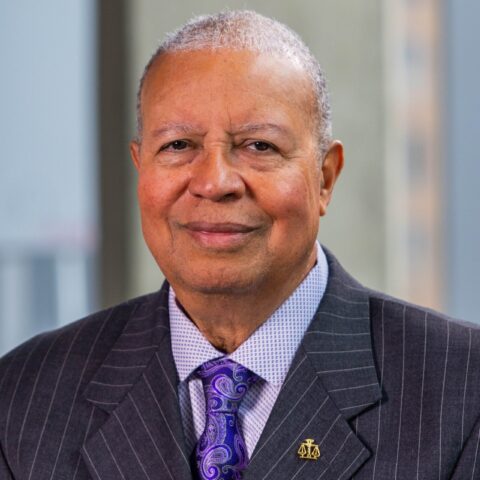
Many of the skills he uses in his work today, he learned during his time clerking for the Honorable Judge Herbert Dixon of the Superior Court of the District of Columbia. “What I learned from him, you can’t learn from a law school book,” Thompson says. “Being thoughtful and deliberate, balancing competing interests, knowing when to ask questions and not assuming you know everything. These concepts all sound simple in theory, but they’re much harder in practice.”
Thanks to his nearly 30 years on the bench and a wide-ranging professional network, Judge Dixon was able to help open doors for Thompson, which led to a role in the Office of the Mayor, advising DC Mayor Vince Gray on criminal justice and other public safety issues. He continued serving as an advisor when Mayor Muriel Bowser took office. He eventually landed in the US Attorney’s office, where he spent five years, ending up as deputy chief of misdemeanors.
But Thompson wasn’t always planning on taking the criminal law route. He once again diverged from the path he was on after a transformative experience in his third year at Wake Forest Law.
“I participated in the Innocence & Justice Clinic, and that was where everything changed for me,” says Thompson. He and his classmate were reviewing the case of Marchello Bitting, who was convicted of attempted armed robbery in January 2002 and was sentenced to 10 years in prison. Bitting claimed that the sentence was based on inaccurate information, and had been doing a lot of pro se filings. He hadn’t been able to get much traction when he was eventually referred to Professor Mark Rabil’s Innocence & Justice Clinic. “My teammate and I researched the issue and found that it was full of merit,” says Thompson.
The rest was history—both for Bitting and Thompson. Thanks to the work of the Innocence & Justice Clinic, including Thompson, Bitting was released from jail early due to the sentencing error.
That was a very powerful experience for me. It not only cemented my interest in criminal justice, but reframed my entire way of thinking about the law. So often we can get caught up in saying ‘well, this person is good’ or ‘this person is bad,’ just by virtue of the position they’re in within the justice system [plaintiff or defendant]. But the truth is, you need competent people working on both sides; people who are going to take the extra step to make sure things are done correctly. From then on, that idea was the North Star for my career.
But beyond those deeply impactful moments, there was so much from his time at Wake Forest Law that Thompson cherishes. For his undergraduate degree, he attended Morehouse College, an all-male historically Black college. “I loved it there. It’s a place like no other in the world,” he says. “But after that experience, coming to Wake was just what I needed.” What drew Thompson to Wake Forest Law was the small class and section sizes, the strong sense of community, and the quality of professors. “Everything about it was second-to-none,” he recalls.
It’s no surprise that Thompson—so skilled at moving effortlessly from one area to another—belonged to multiple communities while at Wake Forest Law. “I had my core group,” he recalls. “But I had friends from my section, friends from playing basketball and flag football, friends I went to bar review with.”

That keen ability to become involved in so many different communities has remained with Thompson, who is active in many ways outside of his professional career. He sits on the board of the Abramson Scholarship Foundation, which is aimed at first-generation college students and provides both financial support and mentoring. Thompson also served for many years on the board of the Boys and Girls Club of Greater Washington. And he plays recreational basketball every week—a throwback to his time at Wake Forest Law, when his intramural basketball team won a championship each year of the three years he was in law school.
Despite his busy schedule, he still has plenty of time to devote to his children, ages 23, 4, and 3. “In all of my life’s work, my greatest accomplishment is my children,” says Thompson. And much like he himself diverged from the path his parents took, so too has his eldest daughter, whose passion is art education, with a specific focus on communities that often aren’t exposed to art. “She recently finished a fellowship at the National Gallery of Art and now has a fellowship at the Metropolitan Museum of Art in New York City,” says Thompson, beaming. She may not have followed in his footsteps in terms of her field of work, but there is no doubt that her commitment to helping people was inherited from her father.
Had Thompson stayed in the field of science, his journey would have certainly unfolded quite differently than it has. Yet, the legacy that he hopes to leave behind would have stayed the same.
If someone were to look back at my body of work, I would like them to say that I was a thoughtful leader, someone who did their best to work across all groups, and with all stakeholders, to achieve a common goal. A visionary who was able to take big ideas and translate them into tangible, impactful work that makes a real difference in the lives of others.
That, of course, takes energy. And energy is what Emile Thompson’s life is all about.