
Interview with Dr. Alyse Bertenthal
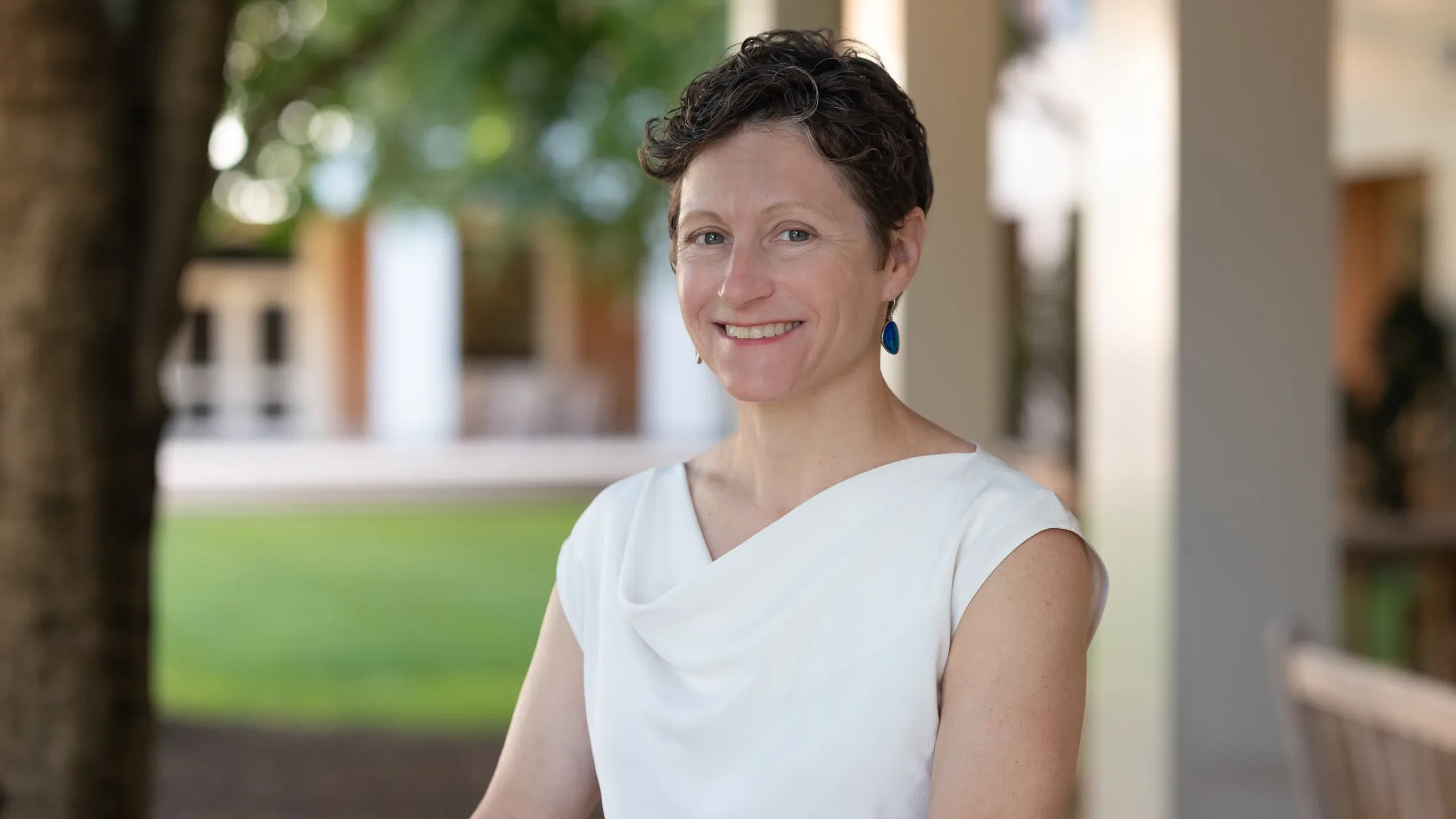
Dr. Alyse Bertenthal has not followed a linear path, and she is glad for that. Long before she became a professor, she imagined a career in teaching. Volunteering in elementary schools throughout high school and college, she saw firsthand the many constraints imposed on teachers and students. That observation pointed her toward law, which offered a way to work on those constraints directly.
From there, her path continued to unfold in unexpected ways. She clerked for federal judges in the Ninth Circuit and Central District of California, and practiced as an attorney with the American Civil Liberties Union Criminal Law Reform Project and then at a litigation and trial firm. Along the way, Dr. Bertenthal began to realize that she was drawn not just to practicing law, but to understanding the ways in which people interpret it, discuss it, and use it.
That instinct eventually led her to pursue a PhD and to take up the work she does today as a socio-legal scholar and professor of law. Dr. Bertenthal has staked out a distinctive place at the meeting point of two fields—environmental law, which asks how we protect land, air, water, and the communities that depend on them, and criminal law, which asks who is held accountable when serious harm is done. As both fields are rapidly being rewritten, that intersection is where some of the most consequential issues of the moment are playing out.
Tenure has given her the freedom to take on the kind of work that can explore these intersections: projects that call for methods she hasn’t used before, that trace a longer arc of history, and that rest on a far larger body of data than she’s worked with to date. For her, the process of research itself is one of the most gratifying parts of the job, especially when it lets her learn from people whose experiences and perspectives differ from her own.
Learn more about Dr. Bertenthal in the interview below.
Tell me a little bit about your background and where you grew up.
I grew up in Charlottesville, Virginia. It has a lot in common with Winston-Salem, so being here feels like home. I was a competitive gymnast, and that was a huge part of my life through high school. Looking back, I think the discipline gymnastics demanded of me shaped my work ethic and how I approach challenges to this day.
What led you to law school?
If I’m honest, law school wasn’t the product of some grand plan. My dad actually used to joke that he’d disown me if I became a lawyer, so it wasn’t the family plan, either. In college, I thought I wanted to become a teacher—there are a lot of educators in my family, and I spent a lot of time volunteering in schools. I know that teachers make a huge difference, but they are also constrained by a lot of things that they’re not able to change–that need to be tackled through law and policy. That was part of what eventually pushed me toward law school.
What was your path to becoming a professor?
After law school, I clerked at a federal Court of Appeals and district court in California and then litigated, working in both public interest and private practice. I liked a lot about practicing law, but I also resisted what I’ve come to see as a lawyer’s way of thinking. A lawyer’s job is to take a position and advocate for it as clearly and persuasively as possible. We need people who do that! But I wanted something different: to explore and understand why and how things get as messy and complicated as they do.
That recognition told me I’d probably be better suited to studying the law from the outside in, rather than practicing it from the inside out. I didn’t make that leap right away, though. First, I took a year off, bought a van, and spent months climbing and hiking around the western United States. Along the way, I took the GRE, applied to graduate school, and came back to start a PhD program.
I tell my students to resist the urge to plan out the next ten years of their lives. If you walk down a hallway, you’ll see doors open that you never expected to be interested in—but if you let yourself walk through them, you might find something on the other side that suits you far better than anything else you had imagined. That’s how I think about my path to becoming a professor: I walked through some unexpected doors, and I’m glad that I did.
Being a professor is really rewarding. I learn something new every day, especially in the classroom, where I get to work alongside so many talented and insightful students. For anyone who is curious about the world and wants to inspire that same curiosity in others, this is the best job there is.
What’s one thing you wish you knew in law school?
I wish I’d understood that your grades and class rank don’t define who you are or set the ceiling on your potential. It’s important to have a sense of your own abilities that exists apart from those narrow metrics—there’s so much that makes a good lawyer that can’t be captured by grades alone.
I also wish I’d known what it took a PhD program to teach me: that law is something that we find beyond statutes and judicial opinions. It’s also lived experience—and lawyers can’t afford to lose sight of that.
With so many current debates around civil rights, criminal justice, and environmental equity, where do you think lawyers can make the greatest difference right now?
I think lawyers should do more to share legal knowledge and information with people and communities. When I was at the ACLU, we spent a lot of time talking with clients about their constitutional rights and how to protect them, and I saw firsthand how much of a difference those conversations could make. People need tools they can use to advance their own interests, whether or not a lawyer happens to be in the room. Lawyers are fortunate to have access to knowledge about the law and legal rights—and I think expanding that access is one of the most meaningful things we can do.
What’s one thing you’ve learned through your scholarship that people should know?
One thing my research has taught me is that using criminal law to advance environmental protection is more complicated than it might first appear. It’s often framed simply as a tool for punishing wrongdoing, but at the intersection I study, it’s also being asked to do something else: protect communities and ecosystems. The tension between criminal law’s traditional role and a more collective purpose is what makes the space worth studying carefully, including its risks and limits. I spend a lot of my time observing, interviewing, and reading through documents, thinking carefully about how people relate to each other and to their environment. I’m grateful that my work puts me in contact with so many people whose experiences differ from my own, and that I get to learn from them.
What is your biggest win since you began your research, and what did the win teach you?
It’s hard to point to any single moment as my biggest win, because the work is cumulative, and most of what I’ve learned has come slowly, through many months of work rather than one significant breakthrough. But if I had to point to something, it’s the moment when I finish an interview, and the person I’ve been talking with tells me, That was really interesting—I’d never thought about these things this way before. Those moments remind me that the questions I’m asking matter to the people living inside them, not just to other academics, and that’s the kind of impact I care most about having.
What’s the biggest challenge you’re facing in your role and area of expertise, and how are you tackling it?
We tend to study environmental law and reform at the national level—national priorities, national regulations, national politics. But law changes in action, and action happens locally: in what people actually do, in how they enforce rules against each other, in the day-to-day relationships between the people doing the regulating and the people being regulated. If we only look at the grand scale, we miss most of where the law is actually being made and remade.
I’ve been tackling that by rescaling my own research to the local level, particularly to environmental enforcement and conservation policing, where officers exercise real discretion in the communities they regulate and where, as a result, the legal meaning of environmental protection actually gets made in ways that rarely show up in national accounts. That’s actually the animating idea behind my next project: a history of localized environmental protection grounded in criminal enforcement. I think recovering that history will change how we understand where environmental law actually came from, and where its future might be headed.
What is the biggest professional challenge you’ve had to overcome?
Probably just the experience of not following a linear path, or not fitting neatly into one discipline. It’s hard to explain yourself to other people, and at times it’s been hard to live through it—there were moments when I worried that I was doing something wrong because I couldn’t apply an easy label to what I was doing. But I place a lot of value on interdisciplinarity, and I’ve come to see the lack of a label as a good thing, not a cost. I genuinely believe scholarship and teaching are stronger when you approach them from multiple angles, and not being confined to any one discipline’s account of “the answer” affords a special kind of freedom and flexibility to follow questions wherever they actually lead. I wouldn’t trade that for a label of any kind.
What’s one of your biggest successes?
Getting a job at Wake Forest Law and becoming a professor here—that’s one of my biggest successes. And that’s not just a feel-good line. I worked a long time toward the idea of becoming a professor, and I not only got there, but I got there at a place that feels right to me. It’s a wonderful institution–one that values its students and values creating community. I feel really lucky that this is where I got to start my academic career.
Now that you have tenure, what is next for you as a professor and for your scholarship?
The project I’m most excited about is the one I mentioned earlier: recovering the history of localized environmental protection and doing it through the lens of criminal enforcement rather than the nuisance law and land use stories that usually get told about the earlier periods of American environmental history. It’s a bigger, longer-term undertaking than anything I’ve done before—it means going further back in the historical record and building out a much larger body of evidence than I’ve worked with to date. That kind of in-depth research matters for how both environmental law and criminal are being rethought: environmental law can’t fully reckon with its own history, or its choices about civil versus criminal enforcement today, without considering this buried criminal lineage, and criminal law scholars skeptical of expanding criminal enforcement have to contend with a body of law that was, in this context, protecting a collective good rather than simply punishing individuals. Putting the two fields in conversation in this way is a big part of what I think makes the project worth doing.
What are your strategies for success?
Honestly, just putting in the time. I don’t have a secret system—I just try to embrace the unexpected and not let it throw me off course. If anything, the projects I’m proudest of are usually the ones that did not go according to plan. But persistence usually pays off, and learning from my mistakes often ends up getting me further than where I wanted to go in the first place.
You enjoy being outside. What got you into that, and how do you make sure that you get outside?
I’m actually terrified of heights, so it probably sounds strange that I went on to take up rock climbing. But I think the fear was part of the appeal: Every time I moved up the rock face, it felt like I was accomplishing something real and in a much more immediate way than most of the work I do. I get outside in search of that feeling, and I make sure I get out by treating it as non-negotiable rather than something to fit in if there’s time left over. My favorite thing is still a backcountry camping trip: Out there, I’m not tied to my phone or a paper that I have to finish, and I can really just be present in the moment. I don’t think hard work is supposed to mean giving up the things that make you happy, and this is the clearest example I have of that in my own life. I come back from those trips more myself and readier to get back to work than I was before I left.
Categories: News, Our People, Our Research